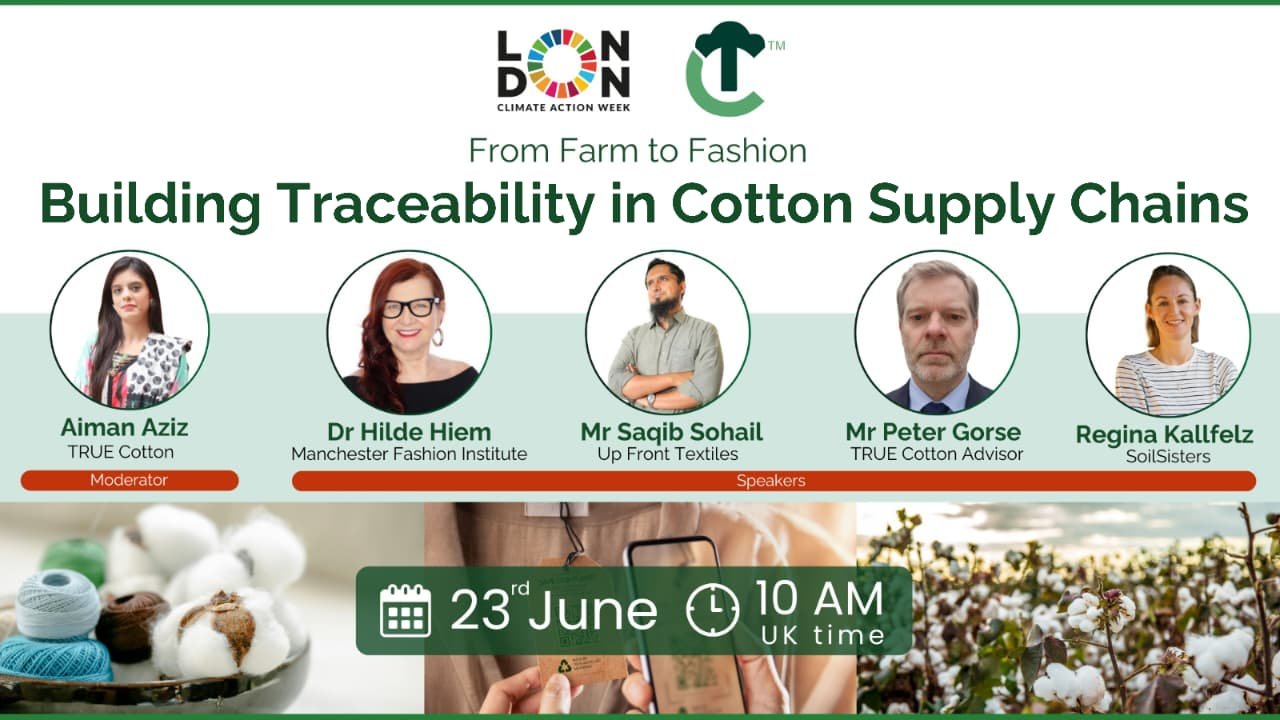
Turning regulation into something an SME can actually use
Dr Hilde Heim · Manchester Fashion Institute
Hilde tackled the part most small businesses find paralysing: a wall of incoming regulation. Through the Manchester Fashion Institute Textiles Transparency Project (MFITT), her team translates rules like the EU Digital Product Passport into practical, operational steps. Her core message was reassuring and concrete the support exists, the resources exist, and no business has to navigate this alone. A wider ecosystem, from CIRPASS-2 to Textile ETP and UKFT, is there to lean on.
Don’t make the farmer the villain
Saqib Sohail · Up Front Textiles
Saqib was direct about the hardest link in the chain: the farm. His framing question how do you bring ESG into cotton farming while keeping it commercially viable for the farmer? Too often farmers are cast as the villains who use too much water, while the role cotton farming plays in sustaining entire rural communities gets ignored. His ask was a shift in method: bring farmers to the table at the very start and co-create solutions with them, rather than handing down a finished idea built by people who have never stood in a field.
Regeneration as a response to pressure, not a luxury
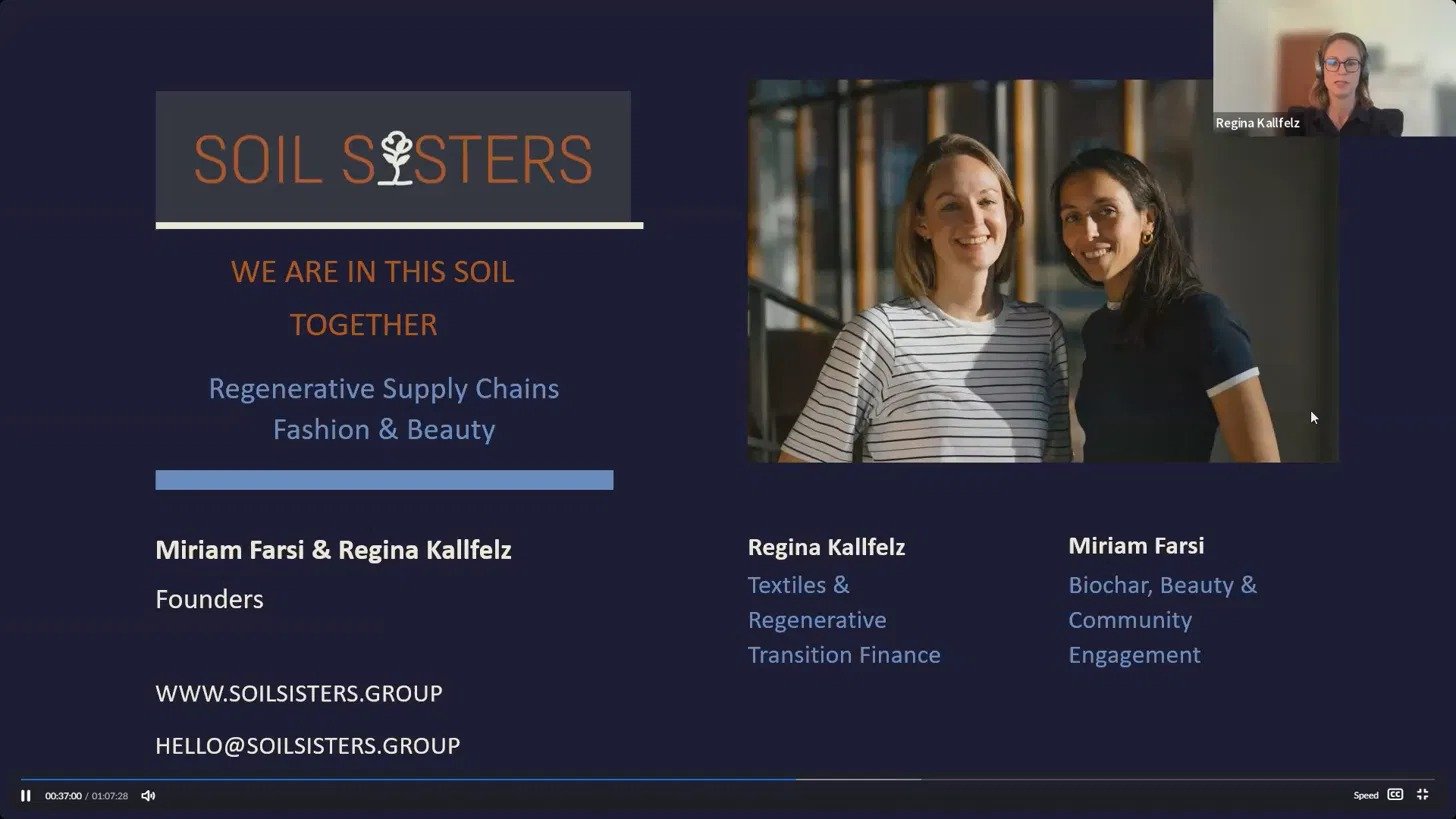
Regina Sophie Kallfelz · Soil Sisters
Regina named the squeeze companies live inside: market pressure and resource scarcity on one side, EU regulation and fast-moving consumer trends on the other. Drawing on Soil Sisters’ work in regenerative supply chains and transition finance, she argued that regenerative models are not a nice-to-have — they are a direct response to that pressure, and they only matter if they work within the commercial realities companies face every day.
What does the consumer actually see?
Peter Gorse · TRUE Cotton Advisor
Peter, an industrial designer, asked where the chain ends at the consumer’s eye. His answer is Garment Facts, a clothing label modelled on the food industry’s Nutrition Facts, so a person can read a garment the way they read a cereal box. It surfaces what is usually hidden: chemicals per 100g of fibre, microfibres shed in the wash, worker pay, and the truth that “100% cotton” rarely is, once you count trim, thread and labels.
The Throughline
Traceability is not one platform or one certificate. It runs from the farmer who has to be treated as a partner all the way to a label a consumer can understand. It is built across the chain, together.
Connect with the speakers